About cerebral infarction

About cerebral infarction

What is cerebral infarction? This page explains about cerebral infarction. Bedridden and hospitalized, unable to communicate…
Many people may have a vague sense of dread.  We have been studying the relationship between vascular activation and cerebral infarction for more than 50 years. By learning about the disease, you too can learn from your daily life.
You may be able to learn preventive and remedial measures.

Brain and stroke

First of all, how does the brain work?

① Summarize your thoughts (thinking, understanding)
② Make people take action (balance, language, movement)
③ Make you feel emotions (emotions, anger, sadness, happiness)
④Cranial nerves (vision, smell, taste, hearing)
⑤Autonomic nerves (sweat, nervousness)
⑥ Hormone regulation (masculinity, femininity, metabolic regulation)…etc.

The brain is the central organ for a variety of symptoms

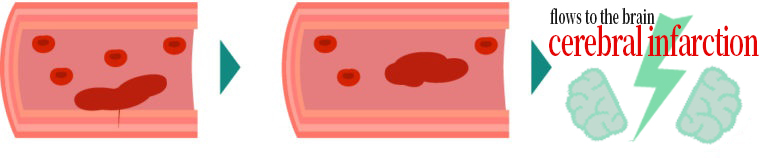
Blood flows through blood vessels and nourishes various organs. However, if the blood vessels become narrowed or blocked, or if the blood becomes thick and clots within the blood vessels, blood flow becomes stagnant and nutrients cannot reach the blood vessels. The organs beyond that point gradually become weaker and eventually die. When these changes occur in the brain itself, the disease is called a cerebral infarction.

When you have a cerebral infarction…

Consciousness disorder, headache, vomiting
Numbness, walking disorder, speech disorder
Dizziness, facial spasms, forgetfulness
Wrong memory, wrong calculation, etc.

All of these are familiar symptoms, and they are often seen when some kind of brain damage occurs. If this symptom worsens, it will interfere with your daily life.

The brain functions because blood vessels carry nutrients

There are various causes of cerebral infarction.
The risk increases further when various factors come together.
No matter which blood vessel it is, if it becomes clogged or becomes ischemic, Brain tissue weakens or deteriorates. As a result, functions deteriorate and various Symptoms will appear.

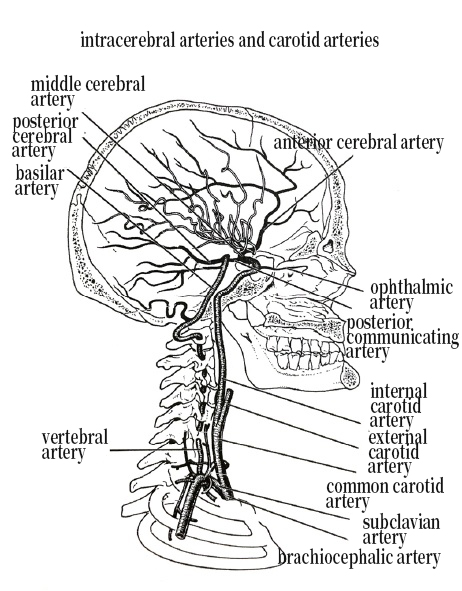
Symptoms of stroke starting with dizziness

Cerebral infarction is a condition in which blood flow to peripheral tissues is cut off due to occlusion of a blood vessel, resulting in brain tissue necrosis.
Brain dysfunction generally occurs depending on the location of the blockage. For example, if blood vessels in the left hemisphere of the brain or thalamus are blocked, symptoms such as difficulty in speaking, difficulty in moving one side of the body, numbness in one side of the body, and leaning to one side when walking gradually develop, leading to hemiplegia and speech impediment. , various brain symptoms such as forgetfulness may appear.

Common symptoms leading up to cerebral infarction

The following symptoms appear gradually:

Phase 1

Dizziness, numbness, light-headed feeling

Phase 2

Language tangles, forgetfulness,
I can’t remember

Phase 3

Mild hempiasis symptoms
Mild gait disorder, mild speech disorder

Stage 4

Dementia symptoms
(I can’t keep up with conversations with people, I often make mistakes)

If you experience these symptoms or see them in your family, it is necessary to undergo a cerebral infarction test.
Please keep in mind that if you notice any abnormal findings, you need to receive medical treatment immediately.

How does a cerebral infarction occur?

There are various factors that can cause a cerebral infarction.

① Blood vessels become hard and cells that make up blood vessels are destroyed.

It is caused by factors that cause arteriosclerosis (hypertension, hypercholesterolemia, hyperoxidized LDLemia, hyperglycemia, etc.). There is also age-related changes such as calcification of the tunica media.

② Blood becomes viscous or hardens

This is largely influenced by arteriosclerosis, but platelet aggregation ability also plays a major role. Also, if you become dehydrated due to lack of water, your blood concentration will increase, which will obstruct blood flow and cause problems in nutritional support.

③ Oxidized LDL increases

When a lipoprotein called LDL that carries cholesterol encounters active oxygen in the body,
It becomes oxidized LDL and becomes a harmful substance. It destroys the endothelial cells of blood vessels.

④When you are under various types of stress for a long time


When stress occurs, blood vessels constrict, leading to high blood pressure and the production of active oxygen, which can damage blood vessels. If blood vessels in the brain are damaged, it can progress to a cerebral infarction.

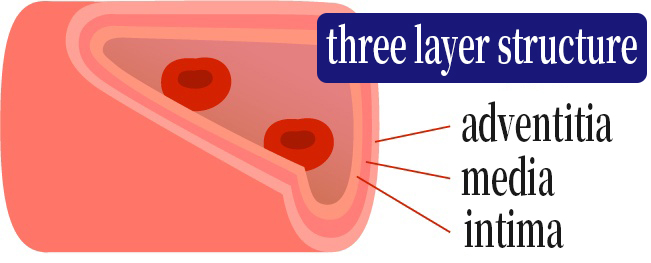
This is the structure of blood vessel walls!

Did you know that bleeding occurs when blood vessel walls are damaged? 
Inside the blood vessel walls are small blood vessels such as feeding vessels, and if a blood vessel is injured, it will rupture and bleed.
Just as a scab forms on the wound when the skin is injured, when the blood vessel wall is injured, components called platelets in the blood gather together.
Stops bleeding and protects wounds. It’s like a scab inside the body.

The larger the wound, the larger the scab. When a large scab forms inside a small blood vessel, the blood vessel narrows.
This will obstruct blood flow. In healthy blood vessels, a healing force called “fibrinolytic action” works to dissolve scabs, but in weakened blood vessels that have developed arteriosclerosis, the scab-dissolving effect decreases and the scabs remain as they are. I’ll put it away.

Treatment to prevent cerebral infarction!

Vascular activation treatment maintains the effect of stopping intravascular bleeding, It makes the scab smaller and encourages the formation of blood vessels that are less likely to cause damage. Blood vessels whose function has decreased due to arteriosclerosis may form scabs at a normal rate, or if they are too large, the blood vessels cannot be dissolved in time. By slowing down the rate at which scabs form and preventing them from growing larger than necessary, you will be able to dispose of them.

Various factors leading to cerebral infarction

Why Metabolic Syndrome is Dangerous

Metabolic syndrome has already become familiar. Although many people are aware that they have metabolic syndrome, they may not be aware of the dangers of it. Metabolic syndrome is a disease termed when the following conditions are met:

《Metabolic Syndrome》

Obesity (waist circumference: 85 cm or more for men, 90 cm or more for women), hypertension, hyperglycemia, abnormal lipid metabolism (high triglyceride blood, low HDL blood) When these diagnostic criteria values are abnormal

In particular, obesity is cited as a top priority.

When fat cells become larger due to obesity, adiponectin (a substance that controls arteriosclerosis) produced by fat cells is no longer secreted, causing cholesterol to deposit in blood vessels, weakening the immune system, and promoting arteriosclerosis.

Neutral fat, obesity, cholesterol and cerebrovascular disease

Patients hospitalized with cerebral infarction tend to have higher triglyceride levels than healthy subjects.
On the other hand, there are often no differences in cholesterol levels compared to healthy people.
You may have heard that “high cholesterol levels have little to do with cerebrovascular disease.”
However, oxidized LDL, which is produced by oxidizing the lipoprotein (LDIL) that transports this cholesterol into the blood, is extremely damaging to blood vessels and tends to be more common in cerebral infarction patients.

aortic calcification

A condition in which arteries become hardened and calcified.
If calcification is found in the aorta, it may indicate that not only a portion of the aorta but also other blood vessels (brain, heart, lower limb blood vessels) are becoming hardened. I have to think about it.
In addition, even if the blood vessels become hard, you may not necessarily notice any symptoms; symptoms only appear when the lumen of the blood vessels narrows. By the time you realize it, it will be too late.
First of all, adjust the hypertension, hyperlipidemia, and blood sugar, which are thought to be the causes, from the pre-symptomatic period. It must be tightly controlled.
Although cerebrovascular disorders are generally more common among the elderly and those with high blood pressure, everyone should take the risks equally seriously.
You can avoid the worst situation by not thinking, “I’m young, so even if I have high blood pressure, my blood vessels are still fine.” If you still have high blood pressure even after measuring it several times, you can consult a doctor and seek treatment. .