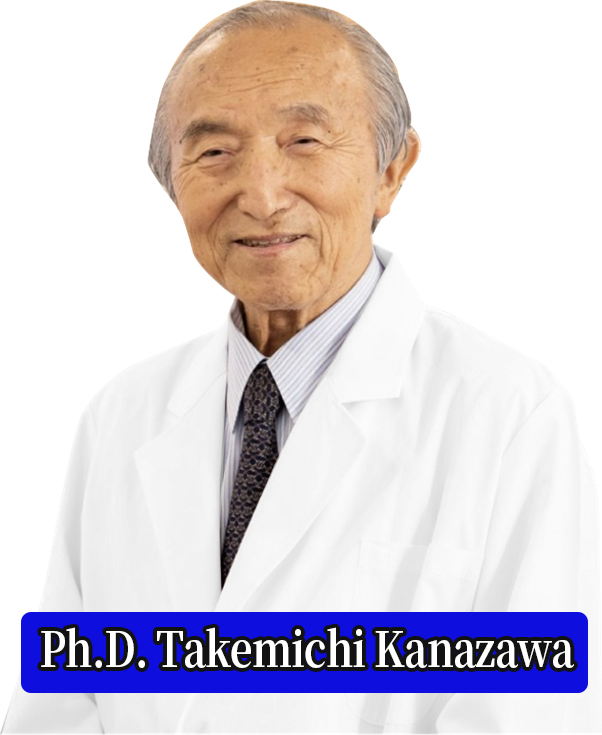
I have been involved in research and clinical practice of cerebrovascular disorders, for more than half a century.
I was born and raised in a small fishing village in Aomori Prefecture. My grandfather died of a stroke when I was in early elementary school.
My grandfather was a proud man who was known around me as the best fisherman in the Tsugaru Peninsula. He was a strong, superman-like man, and his death came as a shock to me. The villagers were saddened every time they lost a worker, and they were driven down into poverty, scared to death that they would be next.
I think it was during this time that the desire to do something about strokes began to grow in my mind.
I was supposed to live as a fisherman like my family, but I was not suited for it because I was very seasick. Fortunately, I was good at studying and my mother told me that if I wanted to be a doctor, I should do stroke or heart. I think my mother also had the death of my grandfather on her mind.
Because of this experience, I am happy to prevent strokes and to see people recovering from the aftereffects of strokes and being happy. I feel as if my grandfather, who was so proud of me, is praising me for a job well done.
Kanazawa infusion therapy would not have been introduced to the world if we had compromised with the idea that it was natural that the aftereffects of cerebral infarction could not be cured.
I have been thinking and researching for a better treatment, which led me to the current therapy.
I was right to choose stroke as my theme. I was right in choosing stroke as my topic, because to know more about stroke, you have to study blood vessels. The more I studied blood vessels, the more profound and interesting they became.
Since I was young, I have always tried to look at diseases from a broad perspective, taking into account the mechanisms of the entire body, believing that diseases cannot be cured by looking only at the bad areas. In the case of a stroke patient, when I examined not only the blocked area but also the entire brain, I found many stenotic areas due to arteriosclerosis.
We realized that this was where recurrence occurred, and when we continued treatment to improve arteriosclerosis and stenosis alone, various aftereffects and other cases were alleviated.
I am often asked, “Why do you work so hard, Sensei?” I am often asked this question.
I think one of the reasons is that when I was young, I read Eiji Yoshikawa’s novel “Musashi Miyamoto” and wanted to live like the famous swordsman Musashi. Musashi pursued the world of swordsmanship not only in terms of mere technique, but also in terms of the state of the human mind and nature.
He went beyond the level of just being strong and focused on the deeper world, including the life of all living beings in this world. Furthermore, because of his pursuit of ideals, he was uncompromising in his character, and because of this, he did not get along with those around him, and he often faced great difficulties due to obstacles and hindrances, and was unable to move forward despite his abilities.
Musashi, however, did not falter. With ingenuity, hard work, inquisitiveness, and determination, he faced the sword and overcame various difficulties.
I was impressed by this way of life. Musashi Miyamoto” encouraged, comforted, and pushed me at every turning point of my life. I asked myself why I became a doctor. What would Musashi do in such a situation? Would he run away with his tail between his legs? He would not do that. I will not be defeated. I would move forward. In this way, I rallied my heart, which was on the verge of breaking. It was Musashi Miyamoto who gave me the courage to move forward when I hit a wall.
As for the Kinjie I.V. Therapy, I am still in a solitary struggle. When things seem to be going well, I sometimes hit the brakes.
However, we cannot be discouraged. In the spirit of Musashi Miyamoto, I am trying my best to move forward, even if it is only one step at a time.
Many of you who visit this site may be suffering from the aftereffects of a stroke yourself, someone in your family, or a friend. I have met many patients and their families. They are exhausted, as are their families. I am always looking forward to seeing them and hoping that they will feel as much relief as possible.
The hand that could only go up to the horizontal level can now go right up to the top. I can now walk without a cane without falling down.
This alone can make a complete difference in one’s life. It also makes it easier to care for them.
If a person who could not express his/her will in words can communicate, even if only somehow, it will be a great help to both the patient and his/her family. Once the uncomfortable numbness is gone or the facial distortion is gone, they will probably be motivated to try new things to the extent they can.
The important thing is that if you feel any signs of stroke, such as lightheadedness, dizziness, or numbness, you should take action as soon as possible, no matter what. This intravenous therapy is very effective. Furthermore, even if you are living a healthy life without any signs of stroke, you may have stenosis in your cerebral blood vessels without knowing it. Please have a checkup once in a while, and if there is any stenosis, remember the IV therapy.
Although this summary focuses on cerebral infarction, there have been cases of cerebral hemorrhage and subarachnoid hemorrhage that have also been effective. I hope to report on that sometime when I have a chance.
I would be very happy if I could be of help to patients and their families who have suffered from cerebral infarction and live with a crippled body.
Thank you for reading to the end.
I wish you all good health.